Build the stack, then spend the hours on your business
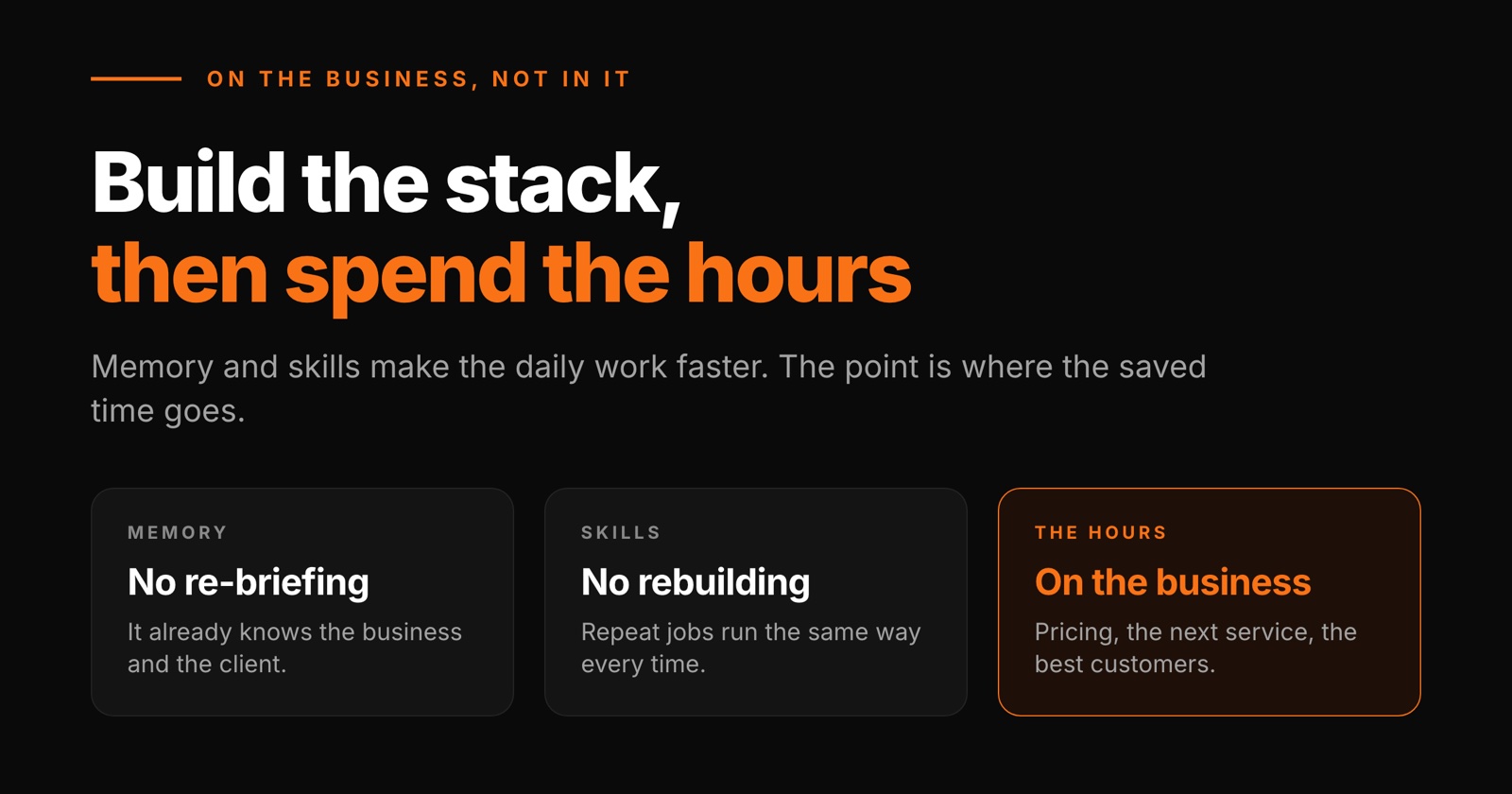
Michael Gerber put it plainly in The E-Myth: most owners work in their business, doing the jobs, when the business needs someone working on it. Pricing, hiring, the next service line. Everyone agrees. Nobody has the hours.
That part has changed. Not because AI does your job, but because a well-built AI setup makes the jobs you already do take less time. What you do with that time is the whole point.
Where does an owner's week actually go?
Write down one week. For most owners we work with in the Eagle River Valley, the small jobs eat it: the phone during a job, the same five questions by text, a post written in English and then again in Spanish, a proposal rebuilt from an old one, and the same project explained to an AI tool every time you open it.
That last one is where most people using AI are stuck.
Why does AI still feel slow for most people?
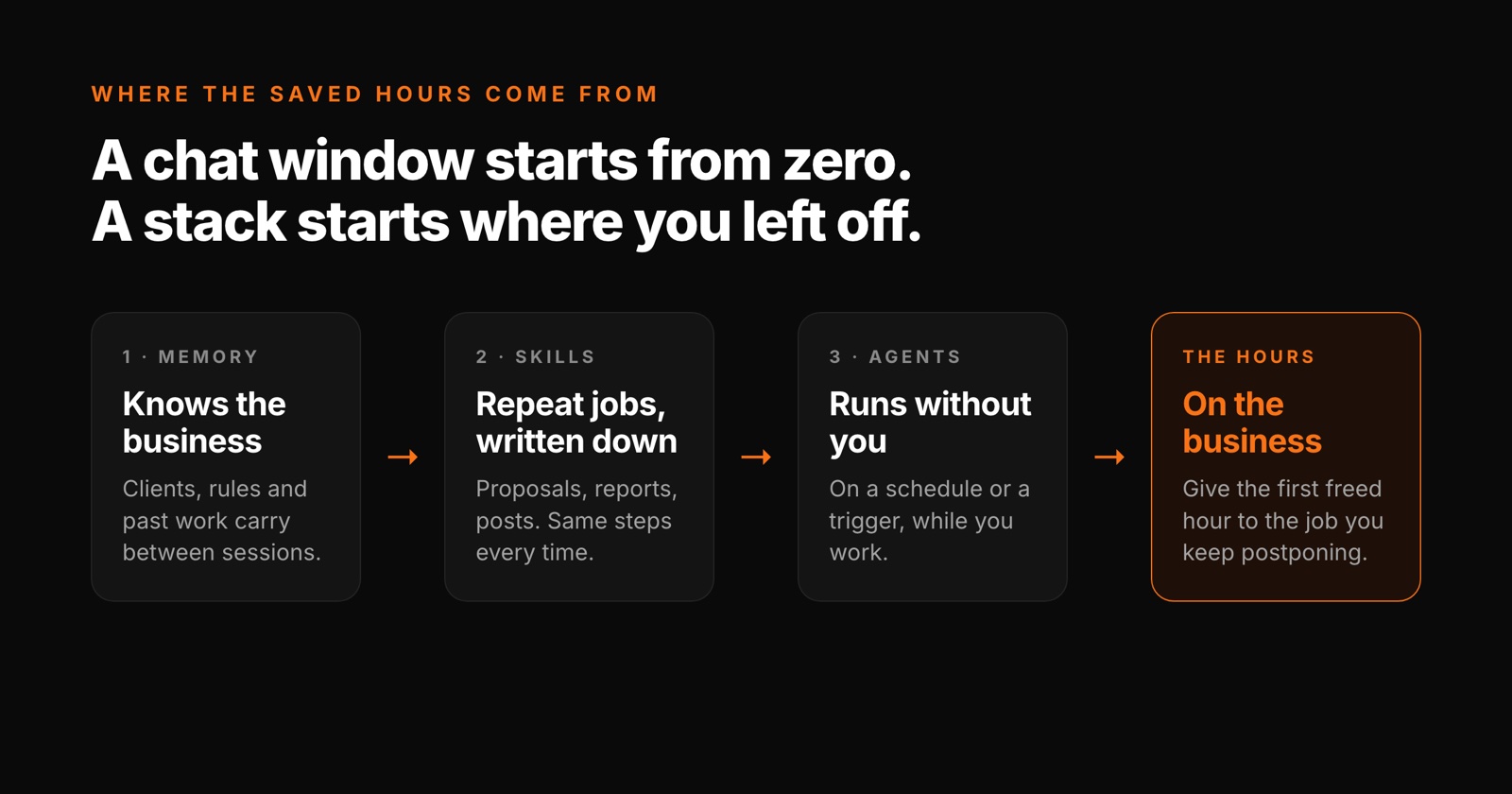
Because they use it as a chat window. Every session starts from zero. You explain the business, the client, the format and the rules, then fix what it got wrong because it didn't know.
The fix is to stop treating AI as a conversation and start building a stack. Three pieces matter:
- Memory keeps what the system knows about your business, clients and preferences between sessions, so you never re-brief it.
- Skills are written procedures for jobs you repeat, like a proposal, a weekly report or a blog post, followed the same way every time.
- Agents run on their own, on a schedule or a trigger, while you do something else.
GrokBot is the easiest place to start if you've never built one. We compared it with other setups in GrokBot or Claude?, and the memory side is covered in a second brain is an architecture, not an app.
What does that look like on a normal day?
This post is an example. We have a skill for writing a blog post: where the file lives, the SEO and FAQ rules, the style rules, how it gets published. Memory holds what's already been written, so the draft doesn't repeat an older post. Work that used to take an afternoon of setup and cleanup now starts at the thinking.
Our phone works the same way from the other side. LUCI, our voice receptionist at (970) 406-4630, answers in English or Spanish and emails us the lead. Nobody here stops a job to pick up a 7pm call.
Neither of these is impressive on its own. Across a week, they add up to hours.
Why doesn't every business get those hours back?
Because the stack can only repeat what exists. A skill can't follow a process you never wrote down. A receptionist can't quote hours your website doesn't list. That's why AI is step four, not step one. Owners who skip to the tools spend their evenings feeding them, which is still working in the business.
What should you do with the hours?
Decide before you get them, or the inbox will. Pick one job on the business you keep postponing, like raising a price, writing the service page you keep meaning to, or calling the customers who send you the most work. Give it the first hour the stack frees up.
To start, keep a list of your interruptions for five days. The one that repeats most, with an answer that never changes, is your first skill.
Frequently Asked Questions
- What does “working on your business, not in it” mean?
- It is Michael Gerber’s distinction from The E-Myth. Working in the business is doing the daily jobs. Working on it is building the systems, pricing and plans that let the business run without you doing every job.
- What is an AI stack?
- A setup where AI keeps memory of your business between sessions, follows written skills for jobs you repeat, and runs agents on a schedule or a trigger. It is the difference between a chat window that starts from zero and a system that starts where you left off.
- Is GrokBot a good place for a small business owner to start?
- Yes. It is the most accessible way to get memory, routines and always-on agents without writing code. Claude is stronger for work that touches files, websites and deploys.
- How much time can an AI stack save?
- It depends on how much of your week is repeat work. The savings come from not re-explaining your business, not rebuilding the same documents, and not handling routine calls and questions yourself.
- Why does AI fail to save time for some businesses?
- It has nothing accurate to work from. If your processes are not written down and your information online is not current, the AI guesses or needs you to correct it.
Ready to find out where you stand?
Get a free business audit.
We'll review your digital presence, competitive position, and where AI can make the biggest difference, at no charge.
Request your free snapshot
John Rounds
Founder & AI Implementation Specialist at Doble AI. Bilingual AI implementation, with 20+ years of international experience across 50+ countries. Builds and runs AI systems for Colorado businesses in both English and Spanish markets.